
1 / 3
Group accommodation centre · Saint-Barthélemy-Grozon (07)
Château de Grozon in the Ardèche
- 20 to 40 people
- 2 rooms
- Walking and hiking
Overview
About the venue
Located 35 minutes from Valence on the Ardèche plateau, the Château de Grozon is surrounded by three small towns: Alboussière, Vernoux-en-Vivarais and Lamastre. Getting to the château is easy, as it's on the D533, and when the spaces in front of the building run out, there's the large car park in the field opposite.
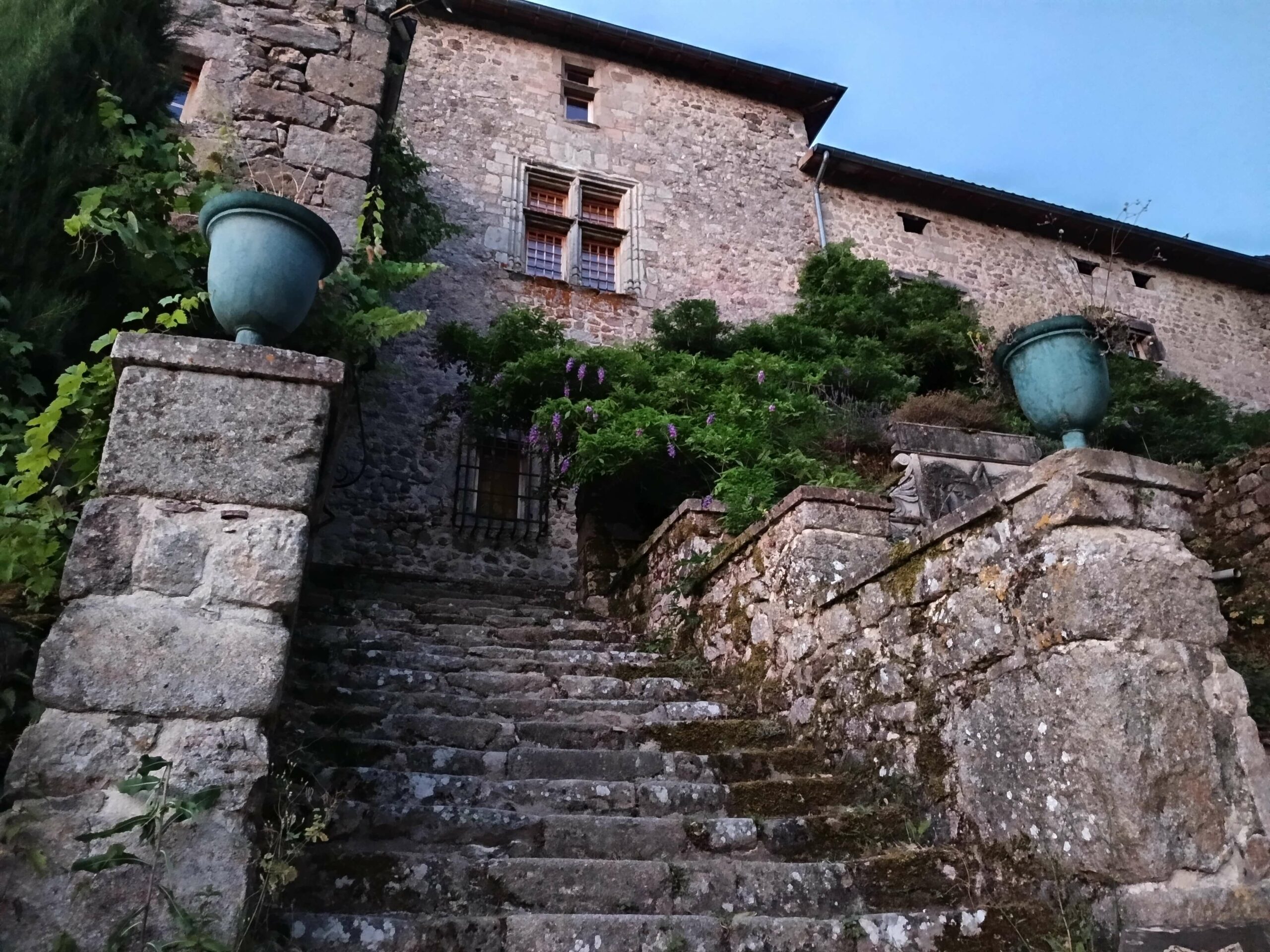
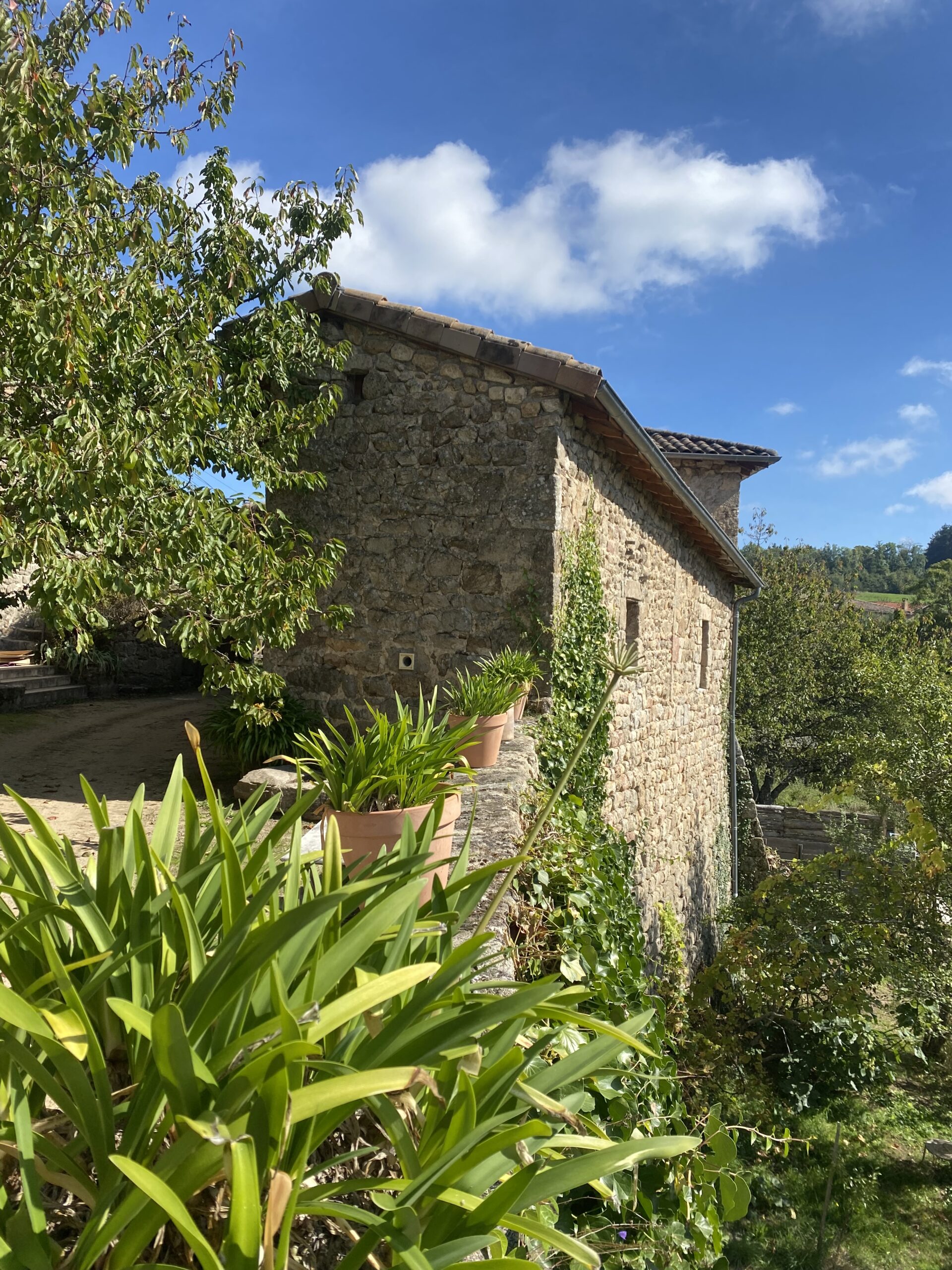
On arrival, visitors can only be dazzled by the beauty of the place: the monumental exposed-stone façade, the fountain showing Saint George slaying the dragon, the huge lime tree and the fragrant wisteria. These walls have seen a thousand years go by. Below, a river runs alongside a wooded path that leads out to the countryside and forests, with hiking and mountain-biking trails.
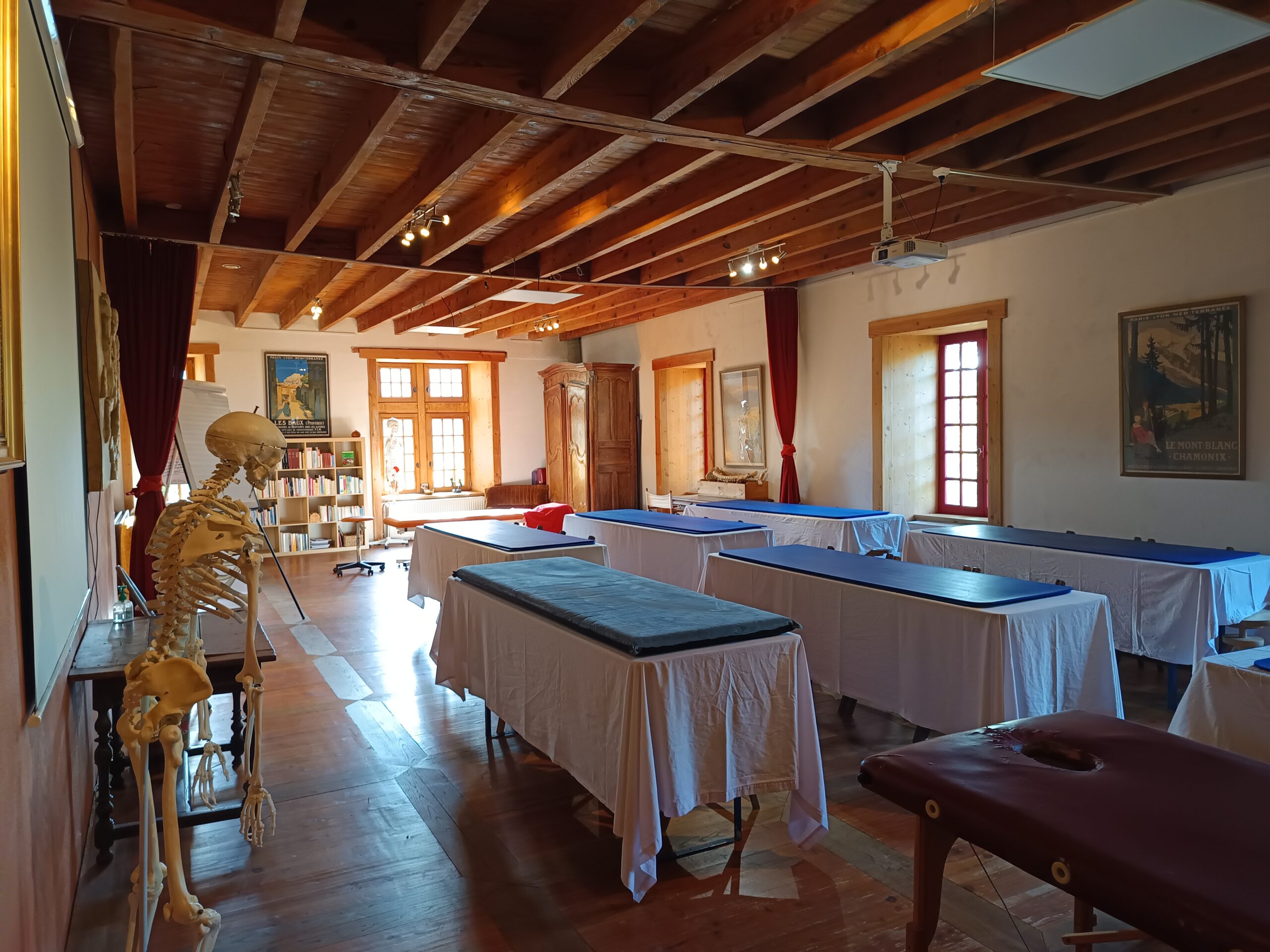
The fully equipped 100 m2 teaching room is bright, and its wooden floor and exposed beams give it a warm feel. The adjoining vaulted room serves as a dining hall, and its three tables seat 20. A small sitting area in front of the wide fireplace (firewood included) makes this medieval room a comfortable, welcoming space.
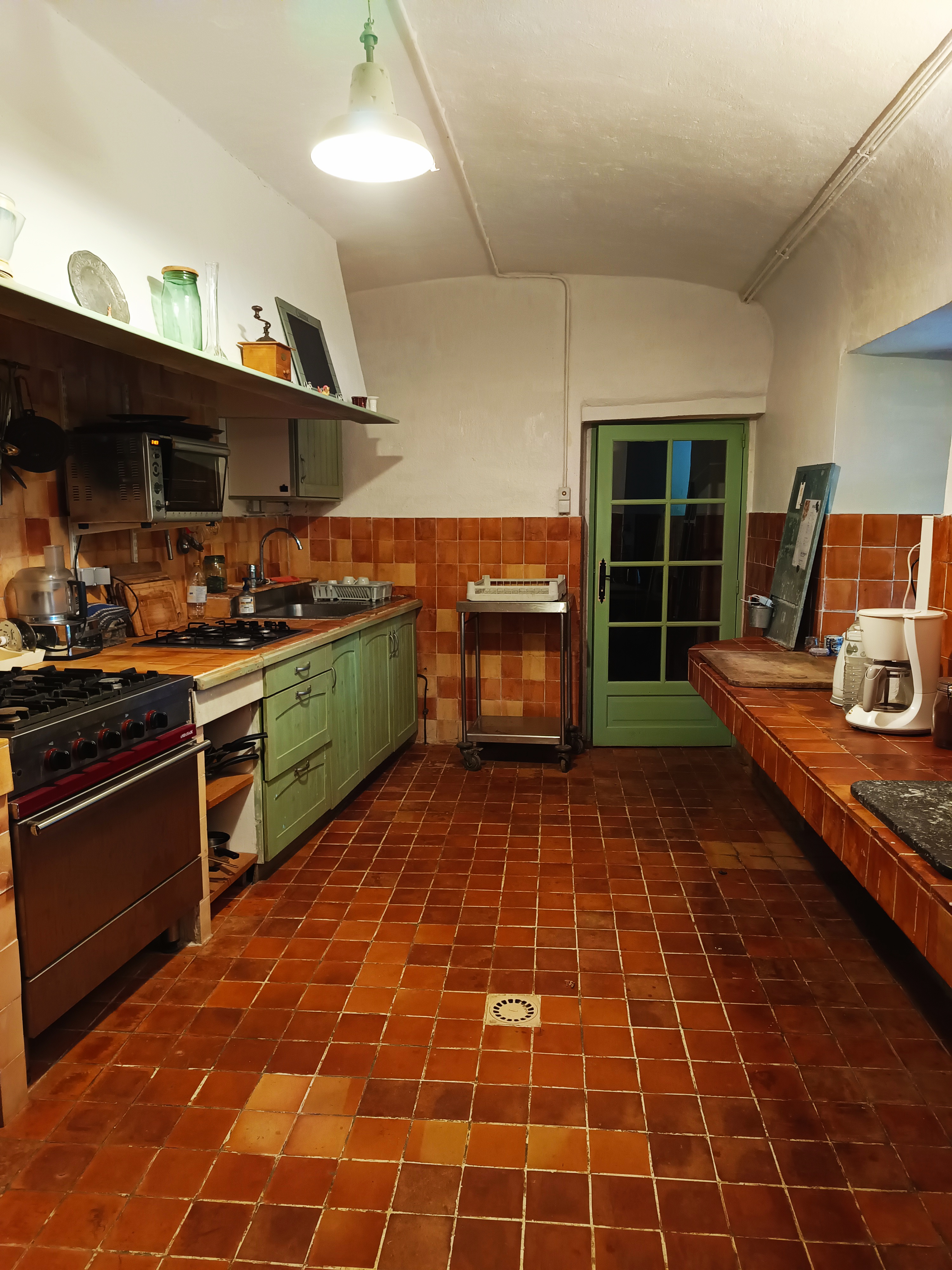
The dining hall (or reception room) and the terrace open onto the fully equipped shared kitchen. The terrace is spacious, furnished with tables and chairs, and partly shaded.
A little history
The Château de Grozon (formerly spelt Garozon, Garauzon or Garausone) is a medieval fortress in the commune of Saint-Barthélemy-Grozon, in the heart of the Haut-Vivarais. Its fortifications date back to the 10th century, although the village only appears in historical records from the 12th century onwards. The site is closely linked to the history of the Knights Templar, who played a major role there from the 12th century.
In 1287, an important agreement was reached between the lord of Grozon (probably a member of the Clérieux family, such as Roger or Guichard de Clérieux, who held the lordship at the time) and the Templars of the Valence commandery. The agreement concerned the fortifications built in the 10th century, which served as the basis for defending the Grozon "mandement" (a seigneurial territory).
This deed of 1287 is thought to mark a formal recognition, an extension or a partial rebuilding of the ramparts, at a time of feudal tension when protection against raids was needed (linked, for example, to conflicts between local lords and the Church). The Templars, already present in the area since 1186 (when Pons Gilbert bought a "manse" called del Vernale), then strengthened their hold on the site, setting up a farm and a military presence there. The Templars bought land at Grozon for 8 Valence livres. The castle became a strategic stronghold under the barony of Chalencon, which at the time counted "80 bell towers", in other words a vast jurisdiction.
14th century: in 1336, Guichard de Clérieux, the lord of the time, bequeathed Grozon to the King of France, Philip VI. In 1358, John II the Good granted the village an exemption from taxes.
In 1390, Raoul de Lestrange, a minor nobleman from the Limousin, bought the estate for 3 000 livres tournois.
The château passed into Catholic hands in 1580 through marriage. It was set on fire in 1789 during the French Revolution, then bought in 1923 by Raoul Giraud, and in 1970 it was bequeathed to Jacques Vernet. The château still has medieval features such as ramparts and an old oratory, reminders of its role as a Templar stronghold.
Send a message
Write to Château de Grozon in the Ardèche
Free, with no commitment. The reply comes straight to your inbox.
Message sent!
Château de Grozon in the Ardèche has received your message and will reply to the email address you gave.
Rooms and services
-
 Enlarge photo
 seminar room
250
seminar room with an adjoining dining hall seating 20 and a fully equipped kitchen.
Reviews
No reviews yet. Be the first to leave one!
Share this listing
Send it to your group or a colleague.
Frequently asked questions
How many people can Château de Grozon in the Ardèche accommodate?
Group size: 20 to 40 people.
Château de Grozon in the Ardèche: how many rooms?
There are 2 practice rooms for workshops and sessions.
Where is Château de Grozon in the Ardèche?
The venue is in Saint-Barthélemy-Grozon, Ardèche (07). Setting: forest. The exact address and directions are on this page.
What makes the venue special?
Peace and quiet, fireplace, walking paths on the estate, air conditioning, a stream, a meditation space, outdoor areas and a calm setting.
How do I book this venue for a retreat?
Use the form on this page to write to the venue with your dates, the number of participants and your activity. The venue replies to you directly. We don't take any commission.
In your region
You might also like
In Ardèche
In Auvergne-Rhône-Alpes
More like this
 26Marsaz

La Clé de Sol in the Drôme des Collines
- 20 to 40 people
Visibility Auvergne-Rhône-Alpes2 rooms1748 views 38Chasselay

Céleste, a haven of wellbeing and creativity in Isère
- 20 to 40 people
Visibility Auvergne-Rhône-Alpes2 rooms4232 views 07Joannas
Mas des Reynauds
- 10 to 20 people
Auvergne-Rhône-Alpes1 room3238 views
Leave a review